
The Old Architecture Is Failing. The Moment Demands Something Different.
The global development system is not in need of incremental repair. It is confronting a structural inflection that incremental reform cannot address. Understanding why this moment is different is the precondition for understanding what the Accra Reset is attempting.
Fiscal Stress in Aid Systems
“International aid fell in 2024 for the first time in six years.”
OECD
Why there is a decline...
The proportion of aid tied to strategic bilateral objectives rather than recipient-country priorities is rising.
The architecture of development finance - designed largely in the postwar decades - was not built for the polycrisis conditions of the 2020s.
Consequence is a planning crisis.
Budget cycles, programme continuities, and institutional staffing decisions that were calibrated to predictable aid flows are being disrupted by withdrawals and redirections that arrive with short notice and no structural alternative in place.
Fragmentation of Multilateralism
Global institutions are under acute stress
New Coalitions Emerge, But Coordination Lags.
WTO dispute settlement suspended
UN Security Council deadlocked
Bretton Woods institutions challenged by alternative financing.
The Security-Economics Convergence
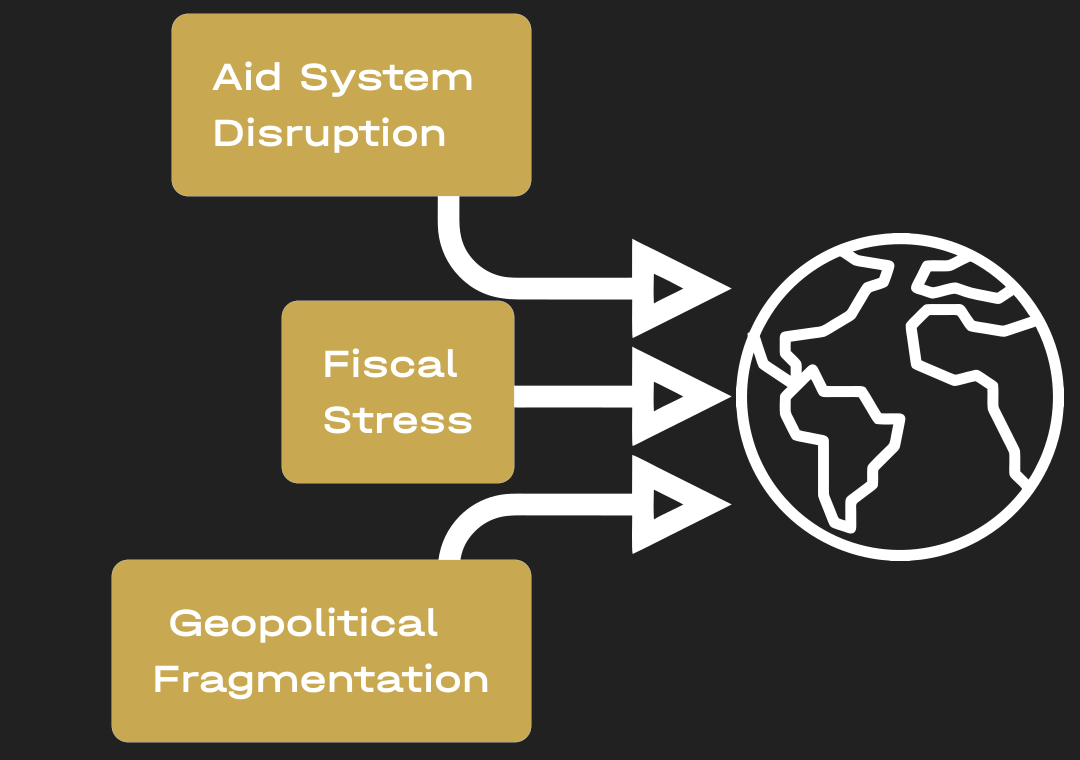
Why Sovereignty Has Re-Emerged as the Decisive Variable
Countries that have invested in their capacity to define their own priorities, negotiate their own terms, and implement their own plans are better positioned to navigate the current period than those that have not.
Sovereignty, in this sense, is not a posture of defiance toward international institutions. It is the precondition for engaging with them productively.
The Accra Reset is committed to changing that balance, systematically, through instruments that build the missing capacities.